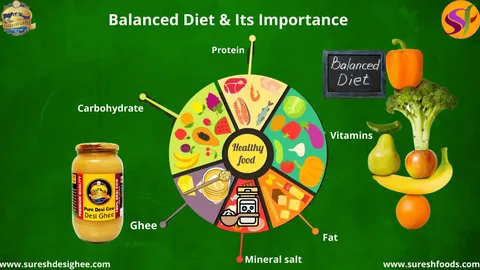
Introduction A balanced diet is one of the most important foundations of good health and proper nutrition. The human body requires a variety of nutrients to carry out essential functions such as producing energy, supporting growth and development, repairing damaged tissues, maintaining the immune system, and regulating body processes. No single food can provide all the nutrients that the body needs in adequate amounts. Therefore, consuming a variety of foods in appropriate proportions is essential for maintaining good health.
A balanced diet does not simply mean eating large quantities of food. It means consuming different types of foods that provide the body with essential nutrients while maintaining appropriate quantities and proportions. These nutrients include carbohydrates, proteins, fats, vitamins, minerals, fibre, and water. The exact nutritional requirements of an individual depend on several factors, including age, sex, physical activity, health status, and stage of life.
Understanding the meaning of a balanced diet is important because poor dietary habits can contribute to nutritional deficiencies, unhealthy body weight, and an increased risk of certain health problems. A balanced diet, combined with regular physical activity, adequate sleep, good hygiene, and appropriate healthcare, can contribute significantly to overall well-being.
Definition of a Balanced Diet
A balanced diet can be defined as a dietary pattern that provides the body with adequate amounts of essential nutrients and energy from a variety of foods to support normal growth, development, maintenance, and physiological functions.
The key principle of a balanced diet is variety, adequacy, moderation, and nutritional balance.
Variety means eating different types of foods rather than relying on a limited number of foods. Adequacy means consuming enough nutrients and energy to meet the body’s needs. Moderation means avoiding excessive consumption of foods that may be harmful when eaten in large quantities. Nutritional balance means consuming nutrients in appropriate proportions.
A balanced diet should therefore contain foods from different food groups.
Components of a Balanced Diet
A balanced diet consists of several major nutritional components. These include carbohydrates, proteins, fats, vitamins, minerals, fibre, and water.
Each component performs different functions in the body, and adequate intake of all of them is necessary for good health.
Carbohydrates
Carbohydrates are an important source of energy.
The body breaks down many carbohydrates into glucose, which can be used as energy by cells. The brain and muscles require energy to perform their normal functions.
Healthy sources of carbohydrates include whole grains, rice, maize, millet, sorghum, potatoes, yam, cassava, fruits, vegetables, and legumes.
Whole grains and other fibre-rich carbohydrate sources are particularly valuable because they provide nutrients and dietary fibre in addition to energy.
A balanced diet should not eliminate carbohydrates unnecessarily. Instead, emphasis should be placed on nutritious sources while limiting excessive consumption of foods and drinks high in added sugars.
Proteins
Protein is another important component of a balanced diet.
Protein provides amino acids that the body needs to build and repair tissues. It is important for muscles, skin, organs, enzymes, hormones, and components of the immune system.
Protein can be obtained from animal and plant sources.
Animal sources include eggs, fish, poultry, meat, milk, and yoghurt. Plant sources include beans, peas, lentils, soybeans, nuts, and seeds.
Including suitable protein sources in meals is particularly important during childhood, adolescence, pregnancy, and other periods when nutritional requirements may increase.
Healthy Fats
Fats are also essential nutrients.
They provide energy, help the body absorb fat-soluble vitamins such as vitamins A, D, E, and K, and contribute to the structure of cells.
Healthy sources of fats include fish, avocados, nuts, seeds, groundnuts, and appropriate vegetable oils.
However, not all fats have the same nutritional characteristics. Foods containing excessive amounts of saturated fats and industrial trans fats should be limited.
A balanced diet therefore includes appropriate amounts of healthier fats rather than eliminating dietary fat completely.
Vitamins
Vitamins are organic compounds required in relatively small amounts for various body functions.
Different vitamins perform different roles.
Vitamin A contributes to normal vision, immune function, and maintenance of tissues.
Vitamin C contributes to normal immune function and collagen formation.
Vitamin D contributes to bone health and calcium metabolism.
B vitamins are involved in energy metabolism, nervous-system function, and other physiological processes.
Fruits, vegetables, whole grains, legumes, eggs, dairy products, meat, and fish can all contribute different vitamins to the diet.
Because no single food provides every vitamin in adequate amounts, dietary variety is important.
Minerals
Minerals are inorganic nutrients that the body needs for normal physiological processes.
Examples include calcium, iron, zinc, iodine, magnesium, potassium, and selenium.
Calcium is important for bones and teeth.
Iron is required for haemoglobin production and oxygen transport.
Zinc contributes to normal growth, development, wound healing, and immune function.
Iodine is needed for the production of thyroid hormones.
Potassium contributes to normal muscle and nerve function.
A varied diet can help provide these and other essential minerals.
Dietary Fibre
Fibre is another important part of a balanced diet.
It is found primarily in plant foods and supports normal digestive function.
Good sources of fibre include fruits, vegetables, beans, peas, lentils, whole grains, nuts, and seeds.
Adequate fibre can help maintain normal bowel movements and may contribute to feelings of fullness.
Increasing fibre intake should generally be accompanied by adequate fluid consumption.
Water
Water is an essential part of a balanced diet.
The human body contains a large amount of water, and water is involved in many processes, including digestion, circulation, temperature regulation, nutrient transport, and removal of waste products.
The amount of fluid an individual needs varies depending on factors such as age, physical activity, climate, diet, and health status.
Water is generally the preferred beverage for hydration. Sugary drinks should be limited because they can provide substantial amounts of added sugar without supplying the same nutritional benefits as whole foods.
Importance of Food Variety
Food variety is one of the most important principles of a balanced diet.
Different foods contain different combinations of nutrients. Eating a variety of foods increases the likelihood of obtaining the nutrients required by the body.
For example, fruits and vegetables provide vitamins, minerals, fibre, and water. Legumes provide protein, fibre, and various minerals. Whole grains provide carbohydrates, fibre, and other nutrients. Fish can provide protein and certain healthy fats.
Combining different food groups therefore produces a more nutritionally complete diet.
Balanced Diet During Childhood
Children need a balanced diet because their bodies are growing rapidly.
Adequate nutrition supports the development of bones, muscles, the brain, immune function, and other body systems.
Children should be offered a variety of nutritious foods, including fruits, vegetables, whole grains, legumes, eggs, fish, meat, dairy products or suitable alternatives, nuts, and seeds.
Parents and caregivers have an important role in creating healthy eating habits during childhood.
Balanced Diet During Adolescence
Adolescence is another period of rapid growth and development.
Teenagers require adequate energy and nutrients to support physical development and daily activities.
A balanced diet during adolescence should include appropriate sources of protein, calcium, iron, vitamins, healthy fats, carbohydrates, and other nutrients.
Nutrition education is particularly important because adolescents often begin making more independent food choices.
Balanced Diet During Adulthood
Adults require a balanced diet to maintain health, support physical activity, and reduce the risk associated with poor dietary patterns.
A healthy adult diet can include whole grains, vegetables, fruits, legumes, fish, eggs, lean meats, nuts, seeds, and appropriate dairy products or alternatives.
Adults should also pay attention to portion sizes and limit excessive intake of foods high in added sugars, sodium, and unhealthy fats.
Balanced Diet During Older Age
Nutritional needs can change as people grow older.
Older adults may experience changes in appetite, digestion, taste, physical activity, or health status.
They still require adequate protein, vitamins, minerals, fibre, fluids, and energy.
Foods that provide substantial nutrients in appropriate portions can be particularly useful.
Older adults with medical conditions or special nutritional requirements should seek individualized advice from qualified healthcare professionals.
Benefits of a Balanced Diet
A balanced diet provides numerous benefits.
First, it supports normal growth and development.
Second, it provides energy for daily activities.
Third, it supports the immune system.
Fourth, it helps maintain healthy bones and muscles.
Fifth, it supports normal digestive function.
Sixth, it contributes to healthy body-weight management.
Seventh, it provides nutrients needed for brain and nervous-system function.
Finally, maintaining a balanced dietary pattern can contribute to overall health and may be associated with a lower risk of certain chronic diseases.
Consequences of an Unbalanced Diet
An unbalanced diet can occur when a person consistently consumes too much or too little of certain nutrients.
Inadequate nutrient intake can result in deficiencies.
For example, insufficient iron can contribute to iron-deficiency anaemia, while inadequate calcium and vitamin D can affect bone health.
On the other hand, regularly consuming excessive amounts of foods high in added sugars, sodium, saturated fats, or energy can contribute to unhealthy dietary patterns and increase the risk of certain health problems.
Both inadequate and excessive nutrition demonstrate the importance of balance.
Role of Families in Promoting a Balanced Diet
Families play an important role in establishing healthy eating habits.
Parents and caregivers can provide nutritious foods, encourage dietary variety, establish regular meal patterns, and serve as positive examples.
Children are more likely to become familiar with healthy foods when they are regularly available at home.
Families can also make healthy eating more practical by planning meals, purchasing seasonal foods, and using locally available nutritious ingredients.
Role of Schools and Communities
Schools can contribute significantly to promoting balanced diets.
Nutrition education can teach children about food groups, healthy meal choices, hydration, and the importance of limiting excessive consumption of unhealthy foods.
School meal programmes can also provide opportunities to expose children to nutritious foods.
Communities can support healthy eating by improving access to affordable fruits, vegetables, whole grains, legumes, and other nutritious foods.
Practical Ways to Maintain a Balanced Diet
Maintaining a balanced diet does not have to be complicated.
Individuals can begin by including vegetables and fruits regularly in their meals.
They can choose whole grains more often, include appropriate protein sources, and select healthier sources of fats.
Water can be prioritized as the main beverage.
Foods and drinks high in added sugars, excessive sodium, and unhealthy fats can be consumed less frequently.
Portion sizes should also be appropriate for the individual’s age, activity level, and nutritional needs.
Most importantly, people should aim for consistency rather than perfection.
Conclusion
A balanced diet is a dietary pattern that provides adequate energy and essential nutrients through a variety of foods. It includes carbohydrates, proteins, healthy fats, vitamins, minerals, fibre, and water in appropriate amounts.
The importance of a balanced diet cannot be overstated. It supports growth, development, energy production, immune function, digestive health, brain function, healthy bones and muscles, and overall well-being.
A balanced diet is not the same for every individual because nutritional requirements vary according to age, sex, physical activity, health status, and stage of life. Children, adolescents, adults, older people, pregnant women, and individuals with certain health conditions may have different nutritional needs.
The foundation of a balanced diet is variety. Fruits and vegetables, whole grains, legumes, protein-rich foods, healthy fats, and adequate water should all have a place in a healthy dietary pattern. At the same time, foods high in added sugars, excessive sodium, saturated fats, and unhealthy fats should be limited.
Ultimately, maintaining a balanced diet is an important part of a healthy lifestyle. When combined with regular physical activity, adequate sleep, good hygiene, stress management, and appropriate healthcare, balanced nutrition can help individuals maintain their health and improve their overall quality of life.
- Meaning of a balanced diet